TL;DR
- •Universal Cart is Google's agentic shopping hub. A cross-merchant cart that follows the user across Search, Gemini, YouTube, and Gmail, runs background agents that find deals, track prices, and flag product incompatibility, and checks out via Google Pay or merchant hand-off. Launch partners: Nike, Sephora, Target, Ulta, Walmart, Wayfair, plus Shopify merchants Fenty and Steve Madden.
- •Universal Commerce Protocol (UCP) expands to 20+ partners (Shopify, Etsy, Wayfair, Target, Walmart, plus an Amazon partnership) and into new categories: hotel bookings and local food delivery. Geographic expansion: Canada and Australia in months, UK later in 2026, YouTube US imminent.
- •Google Marketing Live (one day later) brought Amazon, Meta, Microsoft, Salesforce, and Stripe onto the UCP Tech Council as co-stewards, formalized a Stripe-Google UCP partnership so Gemini and AI Mode checkouts clear through Stripe, and pushed UCP-powered checkout into Canada and Australia with the UK to follow. Same morning Google previewed agentic shopping ad surfaces inside AI Mode and the Gemini app.
- •AP2 (Agent Payments Protocol) hits v0.2.0 with tamper-proof "Mandates" (cryptographic intent signatures) and Human-Not-Present payments. Google donates AP2 to the FIDO Alliance to push it as an open standard. 60+ partners including Adyen, Amex, Ant International, Coinbase, Etsy, Mastercard, PayPal, Revolut, Worldpay, Salesforce, ServiceNow, Intuit.
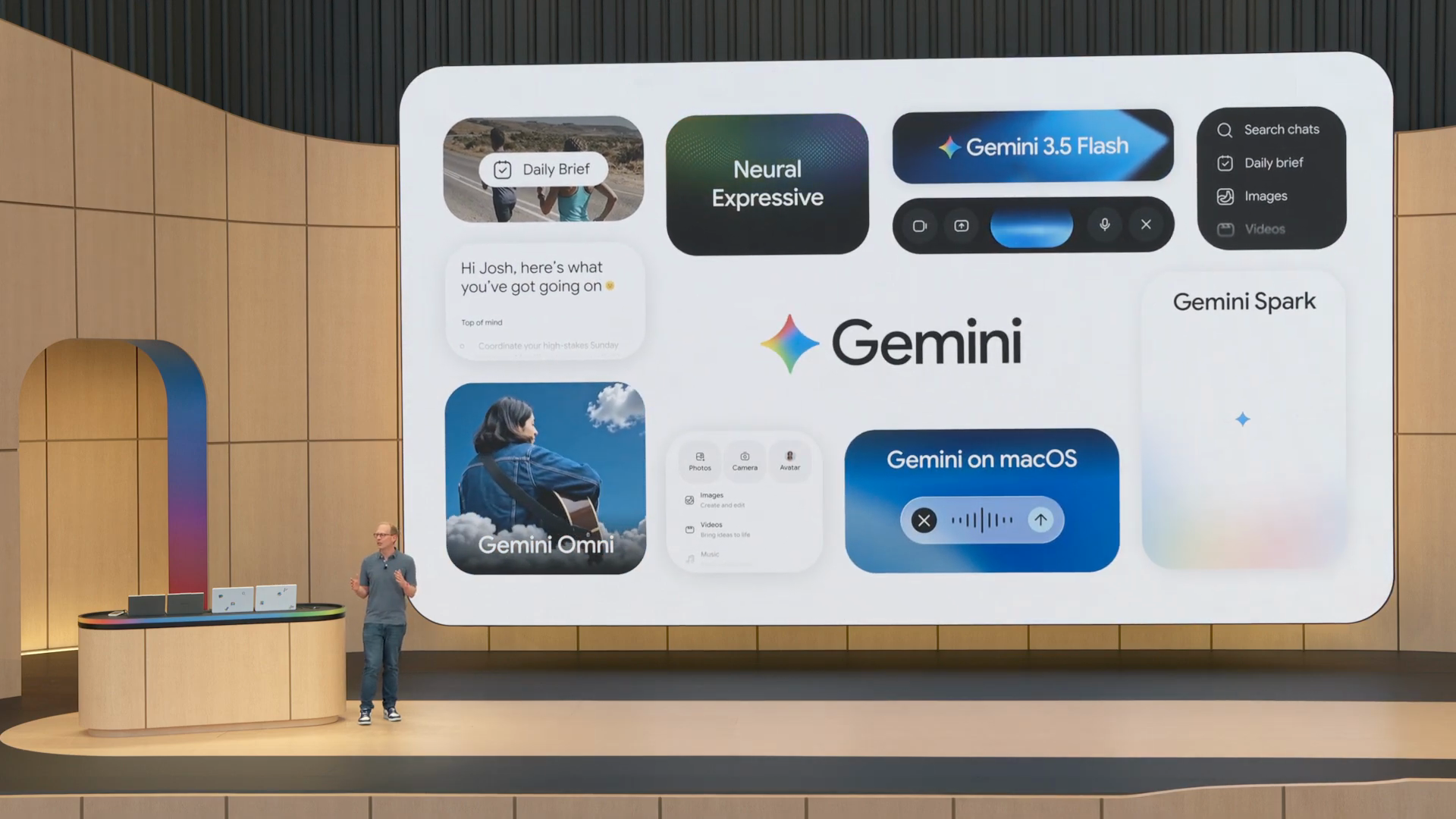
- •Gemini Spark launches as Google's cloud-resident 24/7 personal agent. Works while the laptop is closed, manages inbox/calendar, drafts emails, and executes purchases through Universal Cart + AP2 spending limits. Lives in a new $100/mo Google AI Ultra tier.
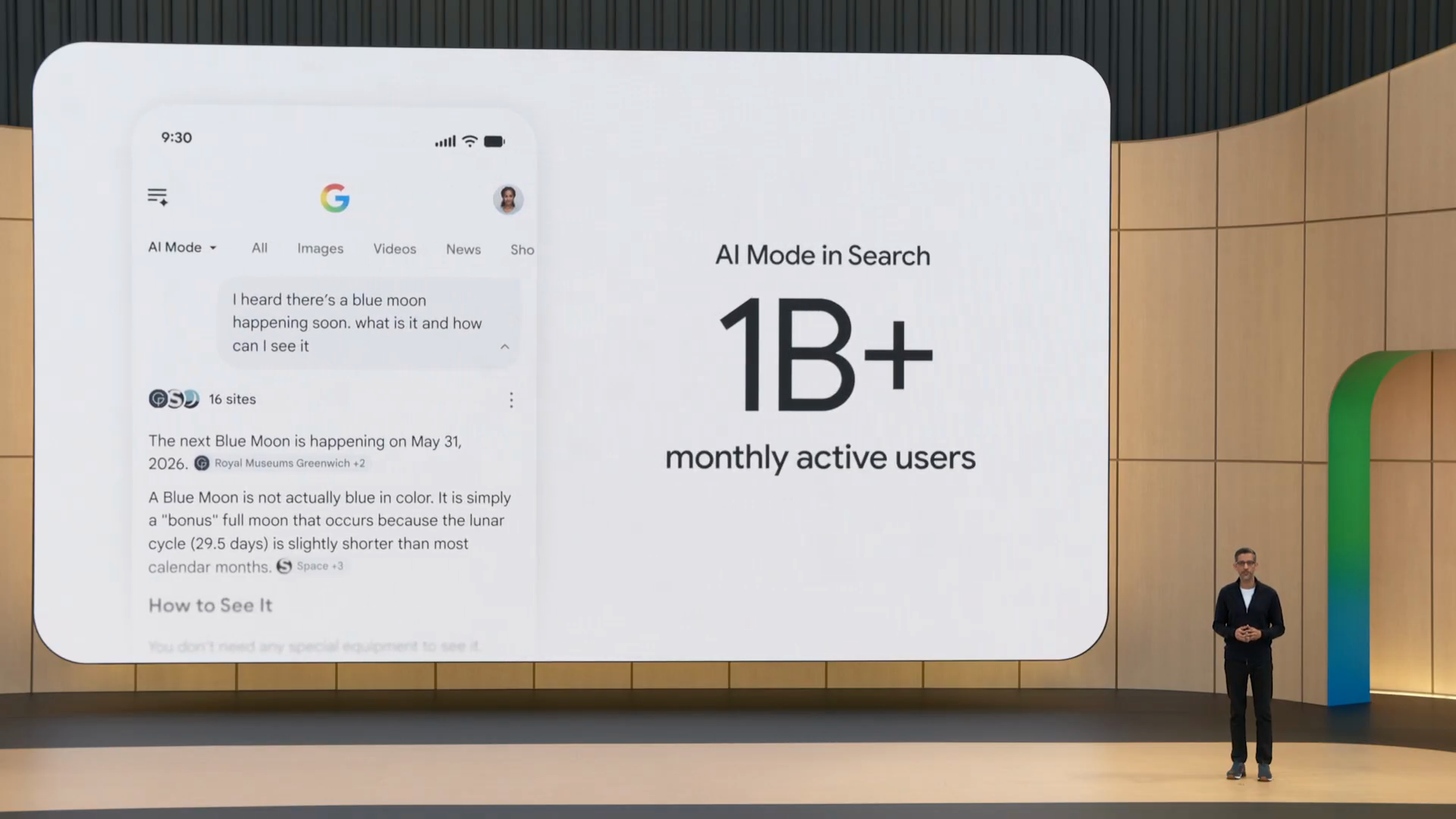
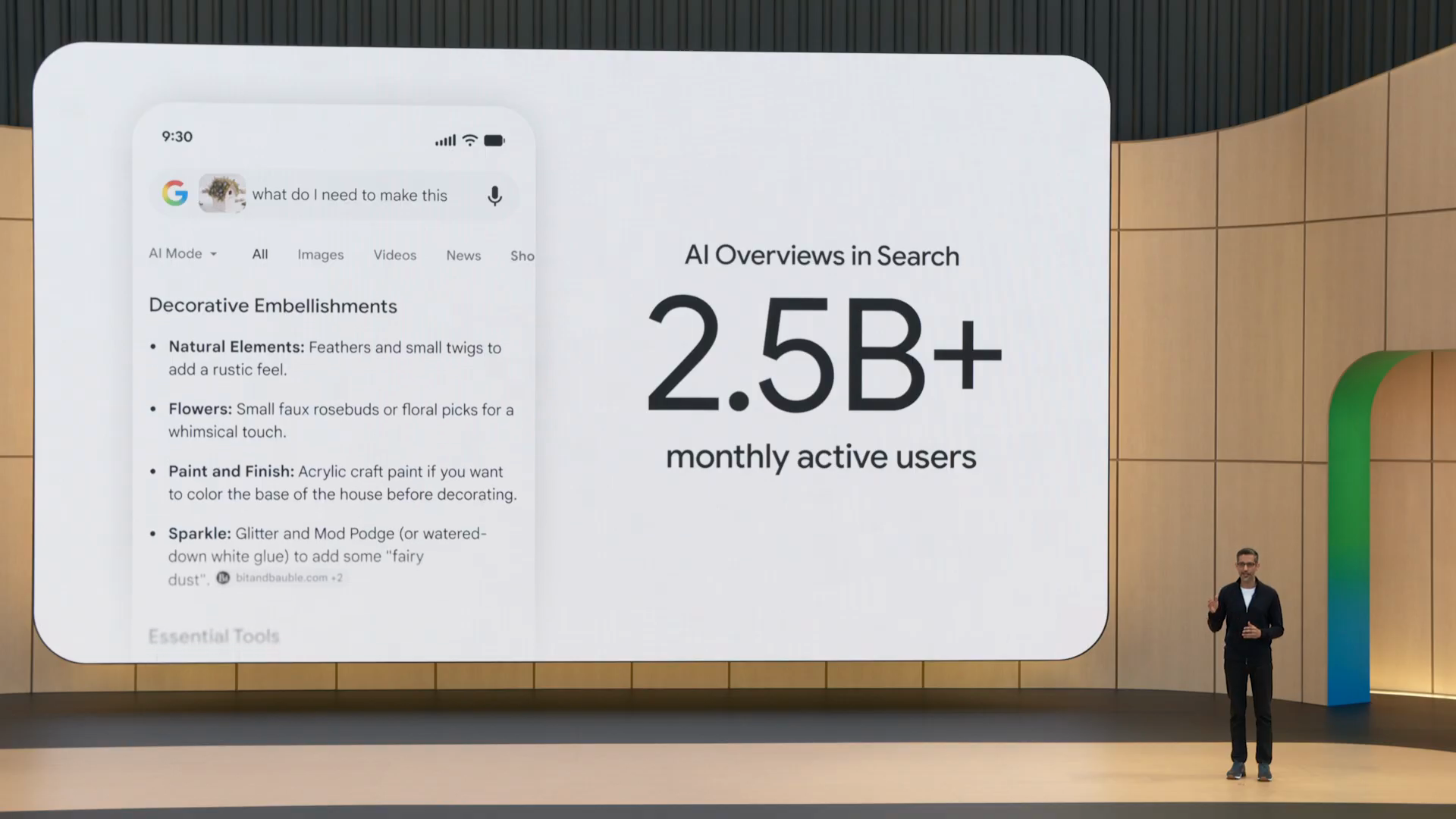
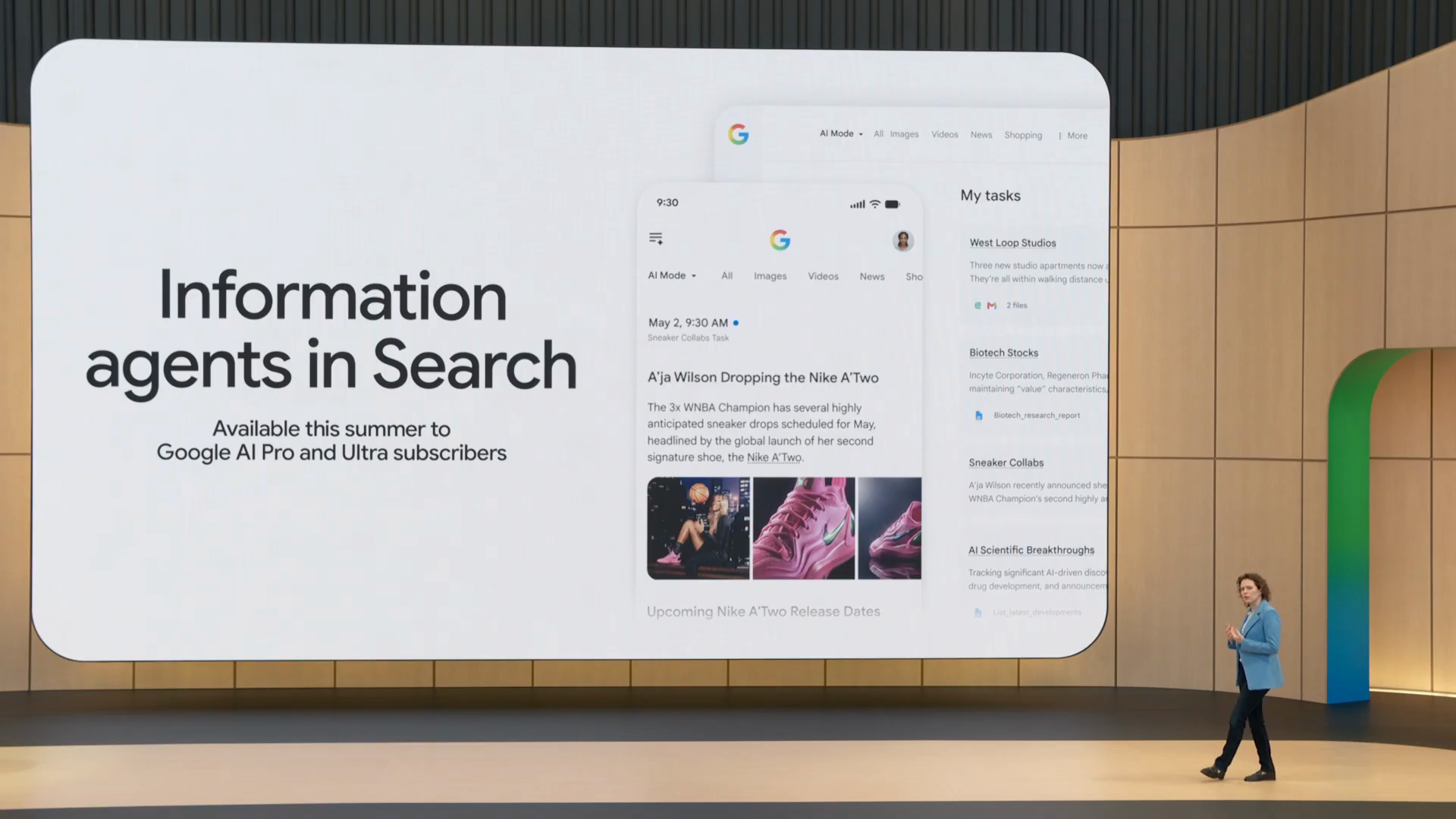
- •AI Mode adds Information Agents: 24/7 persistent agents that monitor the web (blogs, news, social, finance, shopping, sports) and ping you with synthesized updates. AI Mode now defaults to Gemini 3.5 Flash, hits 1B MAUs; AI Overviews 2.5B MAUs. Search box accepts text/images/files/videos/Chrome tabs in its biggest redesign in 25 years.
- •Project Mariner is officially shut down (closed May 4). Its tech now powers Gemini Agent (archive emails, book hotels) and Chrome's new auto-browse for multi-step tasks like flight research.
- •Ask YouTube ships a conversational interface that finds and jumps to the most relevant segments of YouTube videos, plus Custom Generative UI + Dashboards for persistent mini-apps and Agentic Booking extending into home repair, beauty, and pet care.
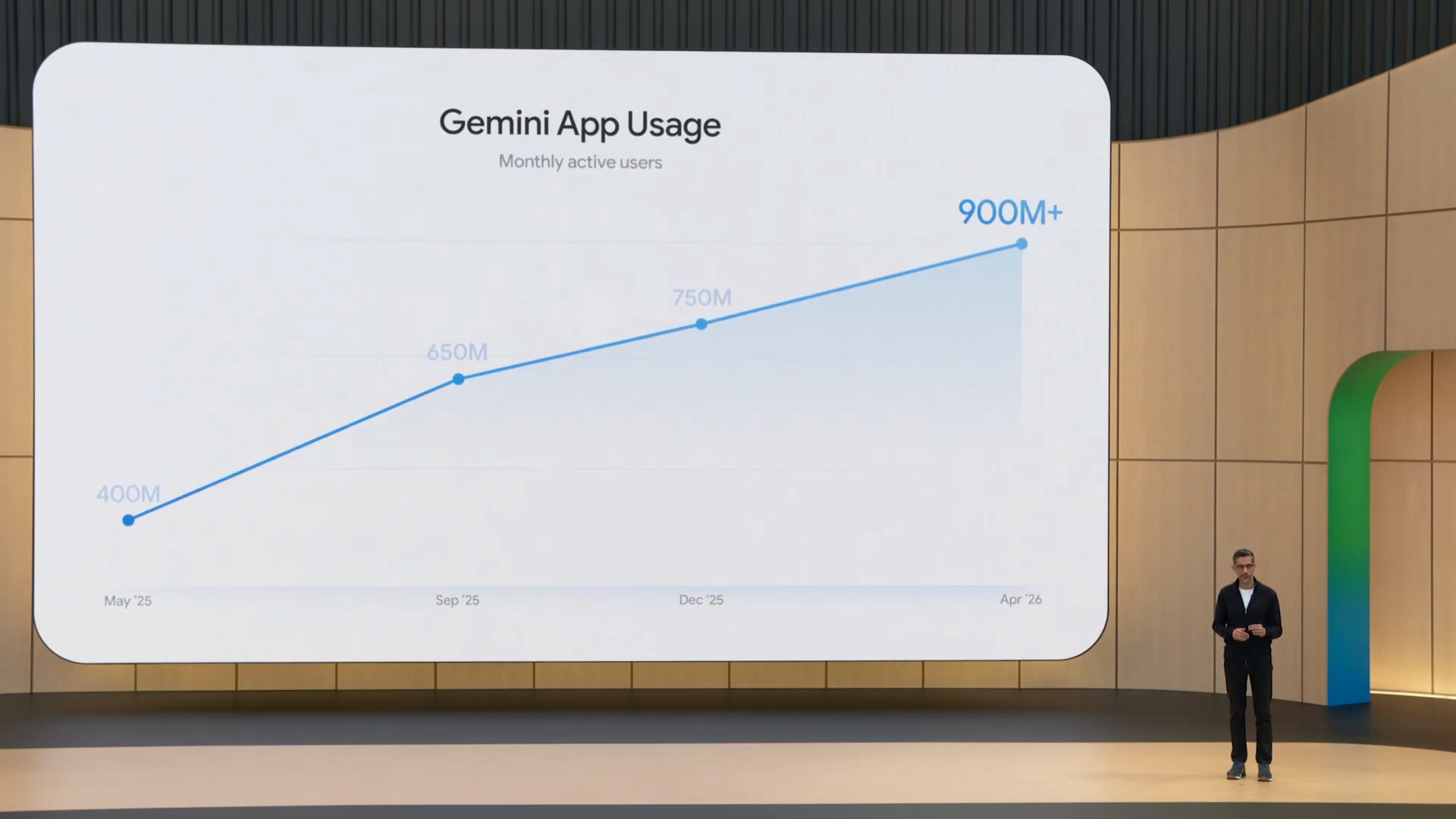
- •Scale numbers Sundar dropped on stage: the Gemini app crossed 900M+ MAUs with 7x+ Y/Y growth in daily requests, AI Mode at 1B+, AI Overviews at 2.5B+, and shopping on Google now happens over a billion times a day. Alphabet capex steps up to $180B to $190B in 2026, roughly 6x 2022.
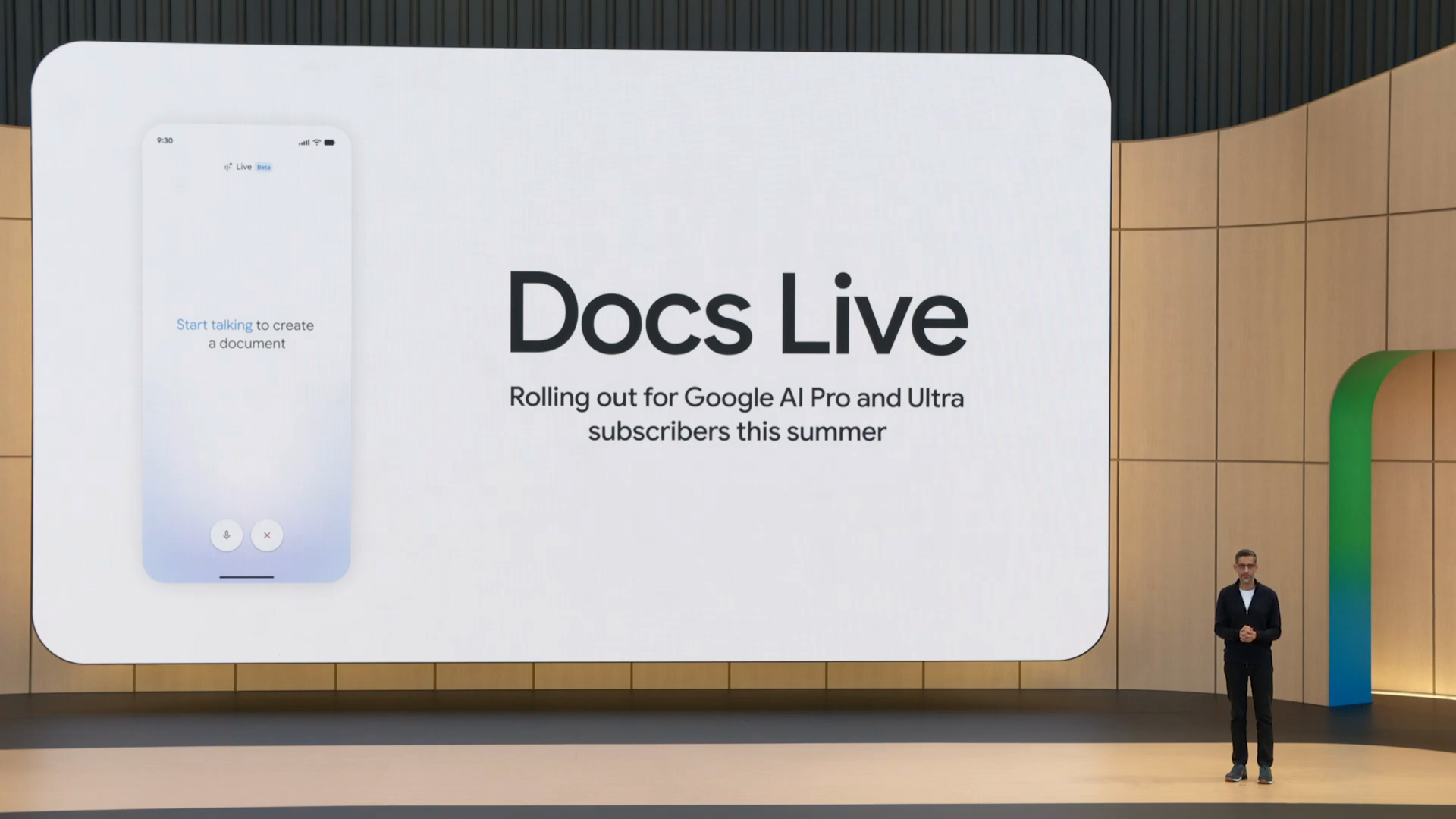
- •Docs Live ships voice-first document creation in Workspace, rolling out to Google AI Pro and Ultra subscribers this summer. Combined with Ask Maps (multimodal local + commerce intent) and the same multimodal Search box, "voice in, intelligence out" becomes a Workspace primitive.
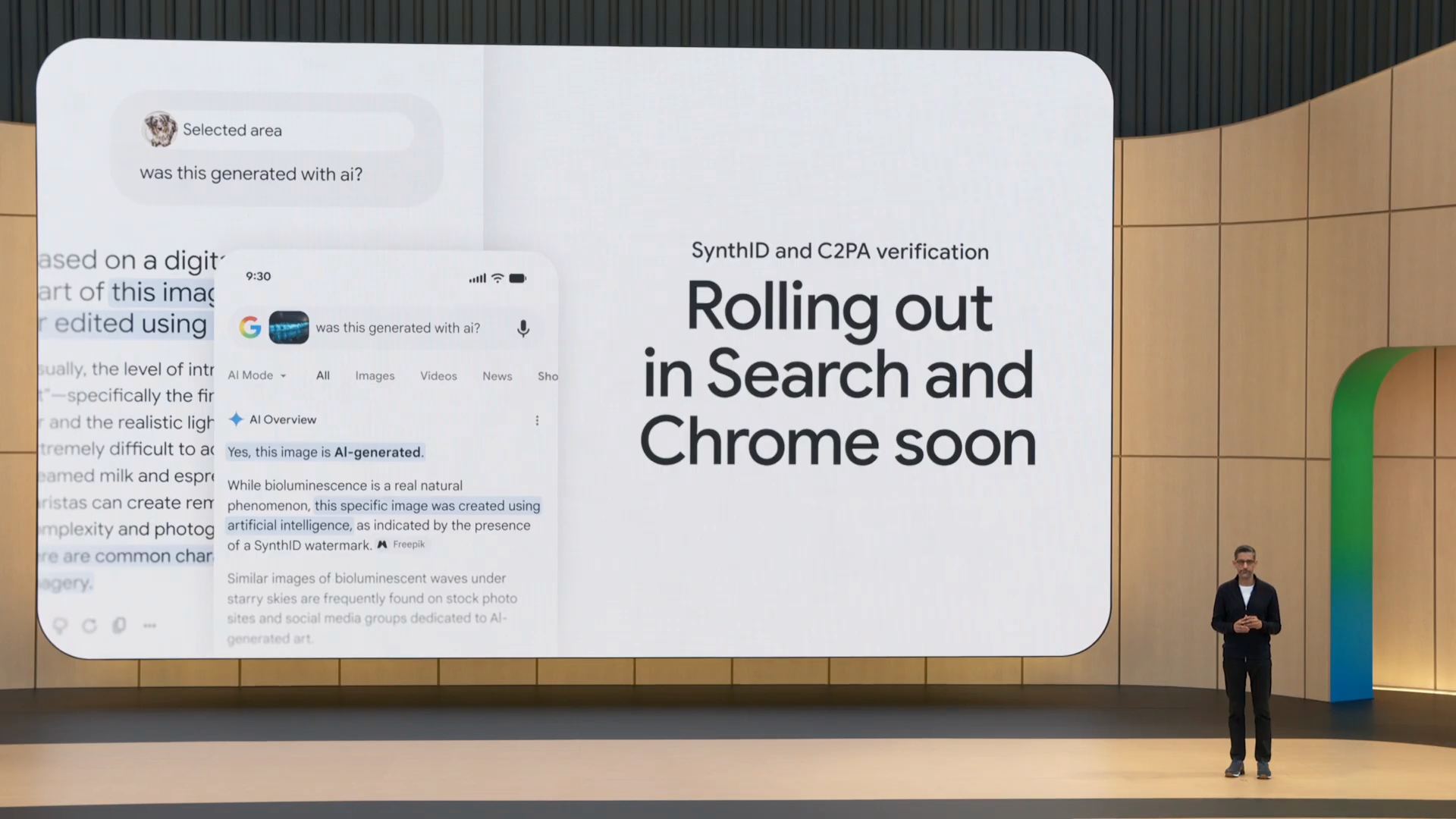
- •SynthID + C2PA verification rolls out in Search and Chrome soon. Any selected image can be checked for AI provenance inline, addressing the trust gap that lands directly on top of the agentic shopping stack (product imagery, listing photos, sponsored placements).
Universal Cart: Google's cross-merchant agentic shopping hub
Shopping on Google now happens over a billion times a day. Universal Cart is the agentic shopping hub Google built on top of that demand: a persistent, cross-merchant cart that follows you across Search, Gemini, YouTube, and Gmail. Background Gemini agents inside the cart watch for deals, track price history, alert on restocks, and flag product incompatibility. The on-stage example: a mismatched motherboard and CPU caught before purchase. Checkout is either Google Pay (one-tap) or a hand-off to the merchant site. Launch partners: Nike, Sephora, Target, Ulta, Walmart, Wayfair, plus Shopify-hosted brands Fenty and Steve Madden. TechCrunch's overview has the demo screenshots.
Universal Cart is Google's answer to ChatGPT Instant Checkout, Perplexity's Comet shopping, and Amazon Alexa for Shopping: a persistent agent-driven cart sitting above merchant sites, not embedded inside any one of them. Universal Cart is the consumer surface; UCP is the rail underneath; AP2 is the payments substrate; Gemini Spark is the agent that drives it.
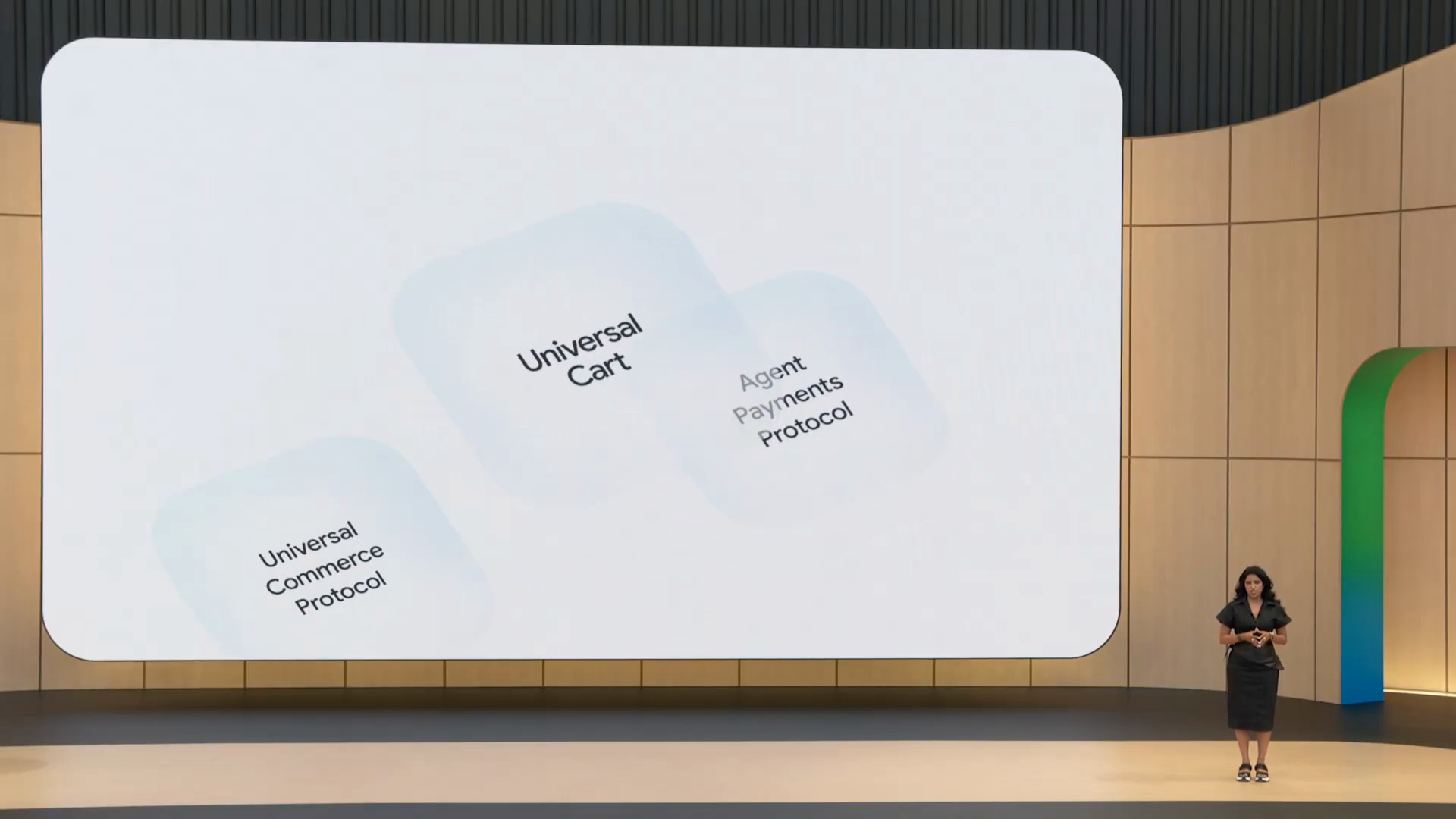
All four pieces showed up in the same keynote on the same day for the first time. Rolls out summer 2026, US first, in Search and Gemini; YouTube and Gmail later in 2026.
Universal Commerce Protocol expands to 20+ partners and new categories
The Universal Commerce Protocol, the open standard Google co-authored with Shopify last year, got the biggest endorsement list to date. Twenty-plus partners signed on, including Shopify, Etsy, Wayfair, Target, Walmart, and an Amazon partnership. The protocol also expanded out of pure retail into two new vertical categories: hotel bookings and local food delivery, which is the first time UCP's schema covers inventory beyond physical goods. Geographic expansion: Canada and Australia in the coming months, UK later in 2026, YouTube US rolling out imminently. Detail in the developers blog deep-dive.
Last week Affirm and Klarna chose UCP over Stripe/OpenAI's ACP for their AI Mode BNPL integration (covered in News of the Week #12). This week Google answered with a 20-partner expansion and two new verticals. UCP is picking up momentum where it matters most: merchant-side adoption.
Google Marketing Live (one day later): UCP Tech Council adds Amazon, Meta, Microsoft, Salesforce, Stripe
Twenty-four hours after the I/O keynote, Google walked into Marketing Live and shifted UCP from a Google + Shopify project into a multi-hyperscaler open standard. Amazon, Meta, Microsoft, Salesforce, and Stripe joined the UCP Tech Council as co-stewards of the spec. The Amazon line is the load-bearing one: at I/O it was framed as "an Amazon partnership"; one day later Amazon is on the governing body of the protocol it competes with on its own retail surface. Search Engine Land read the move as UCP graduating to the de facto open standard for AI shopping.
Same morning Stripe and Google formalized a UCP partnership. Stripe is implementing UCP across its platforms, which lets any Stripe merchant accept a purchase originating in Google AI Mode or the Gemini app without bespoke integration work. With ACP already shipped jointly by Stripe and OpenAI for ChatGPT, Stripe is now the only PSP that natively spans both major agentic protocols. The protocol war that looked like ACP-vs-UCP at the start of 2026 collapsed into "every hyperscaler ships UCP, ACP is a feature on top, Stripe sits underneath both."
Marketing Live also reaffirmed the I/O-day geo and vertical commitments and gave them firmer dates: UCP-powered checkout extends to Canada and Australia in the coming months and to the UK after that; hotels and local food delivery are the first new verticals beyond retail. Google previewed agentic shopping ad surfaces inside AI Mode and the Gemini app on the same morning, signalling that the commercial layer (sponsored placements visible to the agent, not the user) is being designed alongside the protocol layer rather than after it.
AP2 hits v0.2.0 with Mandates and Human-Not-Present payments, donated to FIDO Alliance
Google's Agent Payments Protocol (AP2) shipped v0.2.0 with two material additions: tamper-proof Mandates (cryptographically signed digital contracts that prove a user authorized a specific agent action), and support for Human-Not-Present payments, where an agent transacts autonomously inside guardrails the user set in advance (sneaker drops, ticket releases, restock alerts). Bigger news: Google donated AP2 to the FIDO Alliance to push it as an open industry standard. Sixty-plus partners on the spec already, including Adyen, Amex, Ant International, Coinbase, Etsy, Mastercard, PayPal, Revolut, Worldpay, Salesforce, ServiceNow, and Intuit.
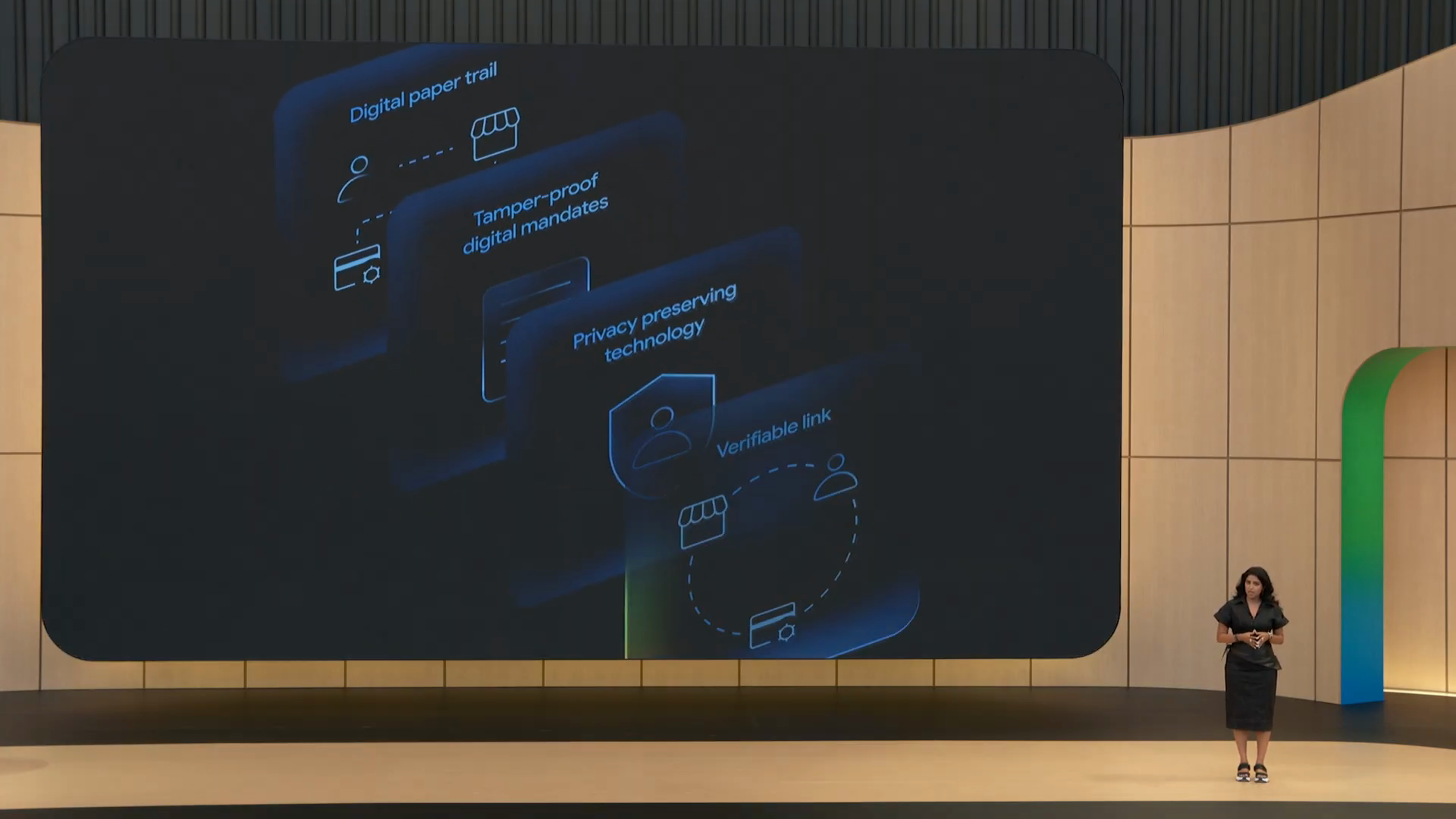
The donation matters more than the v0.2.0 features. FIDO is the body behind WebAuthn and passkeys; donating AP2 to it positions Google as the convener of the standard rather than its sole owner, which is the move issuers and payment networks need to see before they'll commit production traffic. Read alongside Visa's and Mastercard's recent Agent Pay launches and the protocol shoot-out becomes a three-way: ACP (Stripe + OpenAI), UCP (Google + Shopify), and now AP2-via-FIDO sitting one layer below as the universal payment rail.
Gemini Spark: the 24/7 personal agent that actually buys things
Gemini Spark is a cloud-resident personal agent that runs continuously, including while your laptop is closed and your phone is in your pocket. Spark manages inbox triage, drafts replies, runs the calendar, scans Workspace, and executes purchases through Universal Cart plus AP2 spending limits. Lives in a new Google AI Ultra tier at $100/mo. Trusted testers this week; broader Pro and Ultra rollout in the coming weeks. The wider Gemini app it builds on now sits at 900M+ monthly active users with 7x+ Y/Y growth in daily requests, the largest installed base any frontier-lab agent gets to ride.
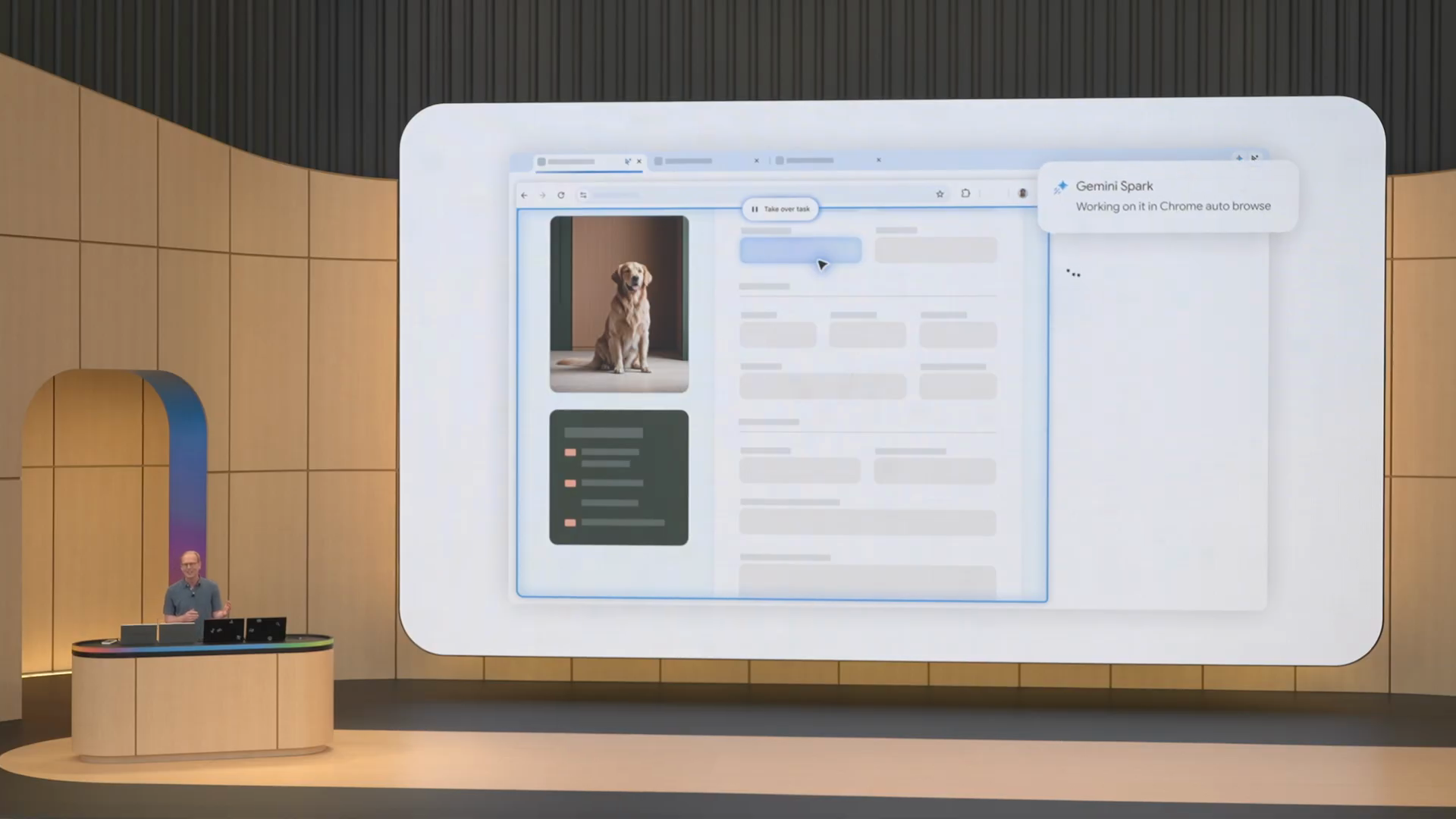
The Spark capability that matters most for agentic commerce is Chrome auto-browse. Spark opens a Chrome window, navigates the page, fills forms, and reads results back to the user, with a "Take over task" control to hand back manual control mid-flow. The on-stage demo had Spark booking a pet boarding stay across multiple sites, drafting a Gmail with a structured pet-medical-history table, and surfacing receipts back inside the Spark thread.
Spark's near-term roadmap was the most concrete commerce-relevant slide of the keynote: proactive MCP integrations, macOS availability, text and email entry points to Spark (no app required), Google Chrome browser control, and the ability to spin up subagents for parallel work. Proactive MCP is the load-bearing one: any MCP server a merchant publishes (Klarna's product search, an Expedia inventory MCP, a brand's storefront MCP) becomes a tool Spark can call without the user reconfiguring anything.
Until I/O 2026, "Google agentic commerce" was a constellation of pieces: UCP for merchants, AP2 for payments, Shopping graph for products. None was directly addressable by a user. Spark ties them together: you tell Spark what you want, Spark uses Universal Cart to find it, AP2 mandates authorize the purchase, UCP routes the transaction to the right merchant. Same architecture OpenAI is building with Operator + Instant Checkout + ACP, but with first-party distribution to a billion-plus Gemini and Search users.
AI Mode + Information Agents: Search becomes proactive
AI Mode crossed 1 billion monthly active users; AI Overviews crossed 2.5 billion. Together they make Search the largest agentic surface on the consumer internet, and the substrate Information Agents and Universal Cart hang off.
New: Information Agents, 24/7 persistent agents created inside Search that monitor the open web (blogs, news, social, real-time finance, shopping, sports) and push synthesized updates and actions back to the user. On-stage examples: apartment-hunting alerts, sneaker drops, biotech-stock watch, AI-research-breakthrough tracking. Information Agents roll out summer 2026, AI Pro and AI Ultra first.
The Search box itself got its biggest redesign in 25 years and now accepts text, images, files, videos, and even Chrome tabs as inputs. AI Mode defaults to Gemini 3.5 Flash globally; the next-gen Gemini 3.5 Pro lands next month. Ask Maps ports the same multimodal capability into local commerce: ask "where can I walk and buy her a new dress in 30 minutes" and Maps stitches together store, distance, hours, and apparel category in one card.
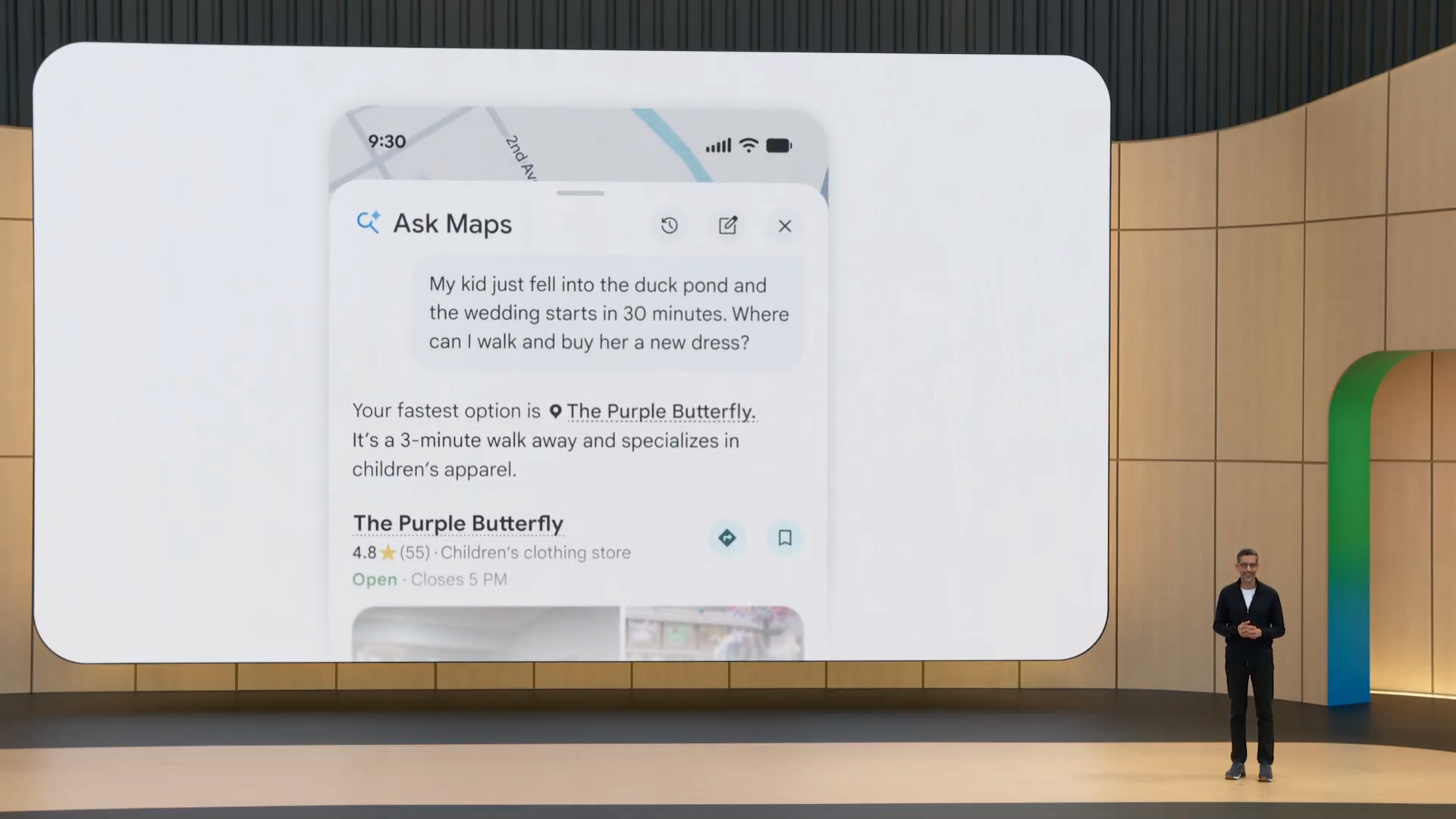
Search is no longer a query, answer, leave loop. It is an agent-host: the same surface that answered a question now watches the web on your behalf, alerts you to changes, and via Universal Cart acts on them.
Project Mariner shut down, folded into Gemini Agent + Chrome auto-browse
Google formally closed Project Mariner on May 4 (just before I/O), and confirmed at the keynote that its computer-vision browser-agent tech has been folded into two production surfaces: Gemini Agent (archive emails, book hotels, multi-step task execution) and Chrome's new auto-browse mode for tasks like flight research and itinerary comparison.
Google is shifting away from CV-driven browser agents (Mariner's original approach: look at pixels, click like a human) toward API-first, protocol-based agentic execution (UCP for commerce, AP2 for payments, structured MCP-style tool calls). The Mariner tech still gets used where the long-tail web has no protocol coverage. The bet is that protocols win the high-volume verticals, which is also why UCP's expansion this week into hotels and food delivery matters: those are the verticals Mariner was demoing 12 months ago.
Ask YouTube, Generative UI, Agentic Booking: the wider AI Mode refresh
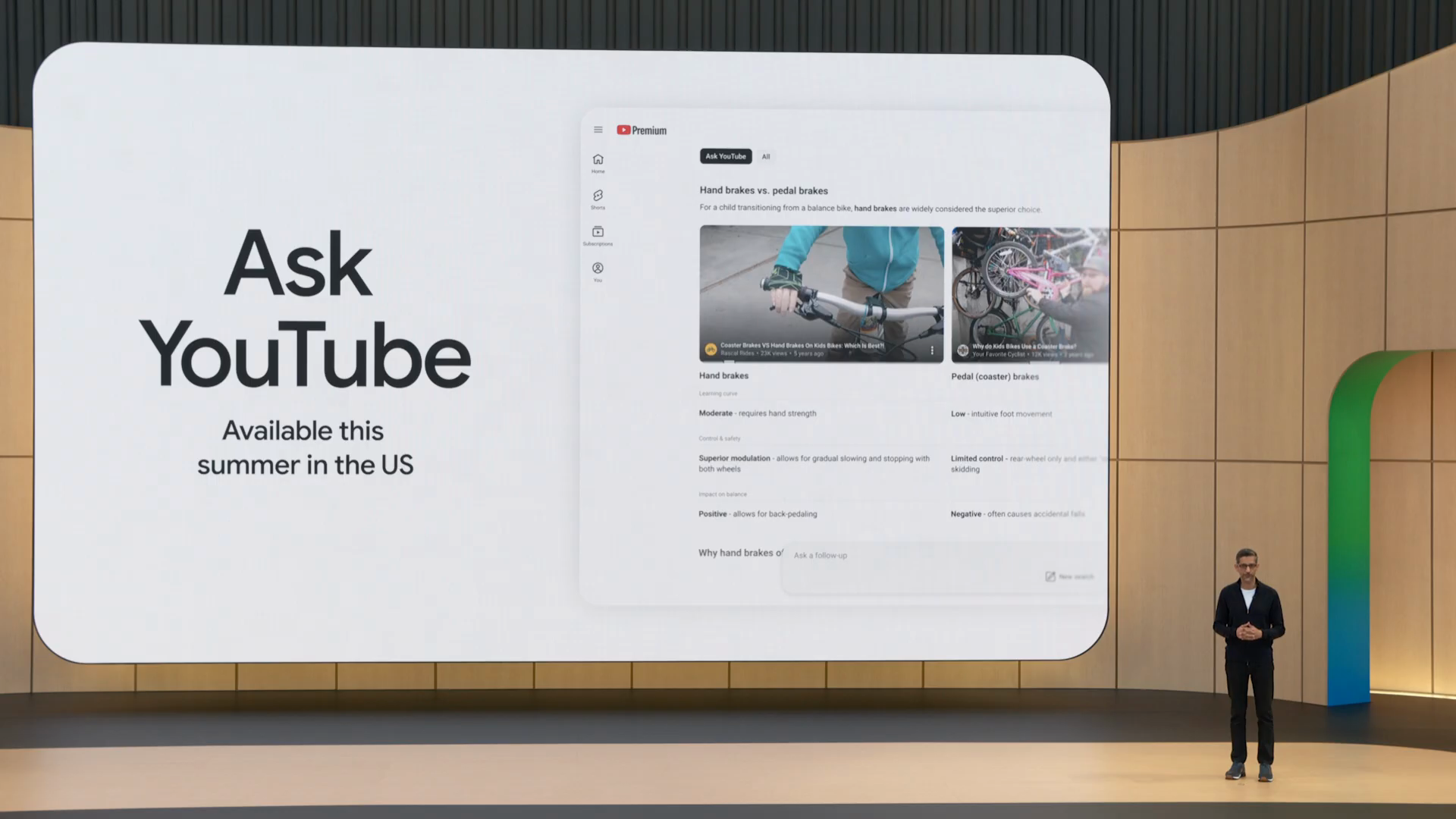
Ask YouTube is a conversational interface that finds and jumps to the specific segments of videos answering a query, turning the YouTube corpus into a queryable knowledge graph. The on-stage example was hand brakes vs pedal brakes for a kid's bike, with comparative tables stitched together from multiple videos. Meaningful for shopping content (product reviews, side-by-side comparisons, tutorials feeding Universal Cart). Rolling out broadly in the US this summer.
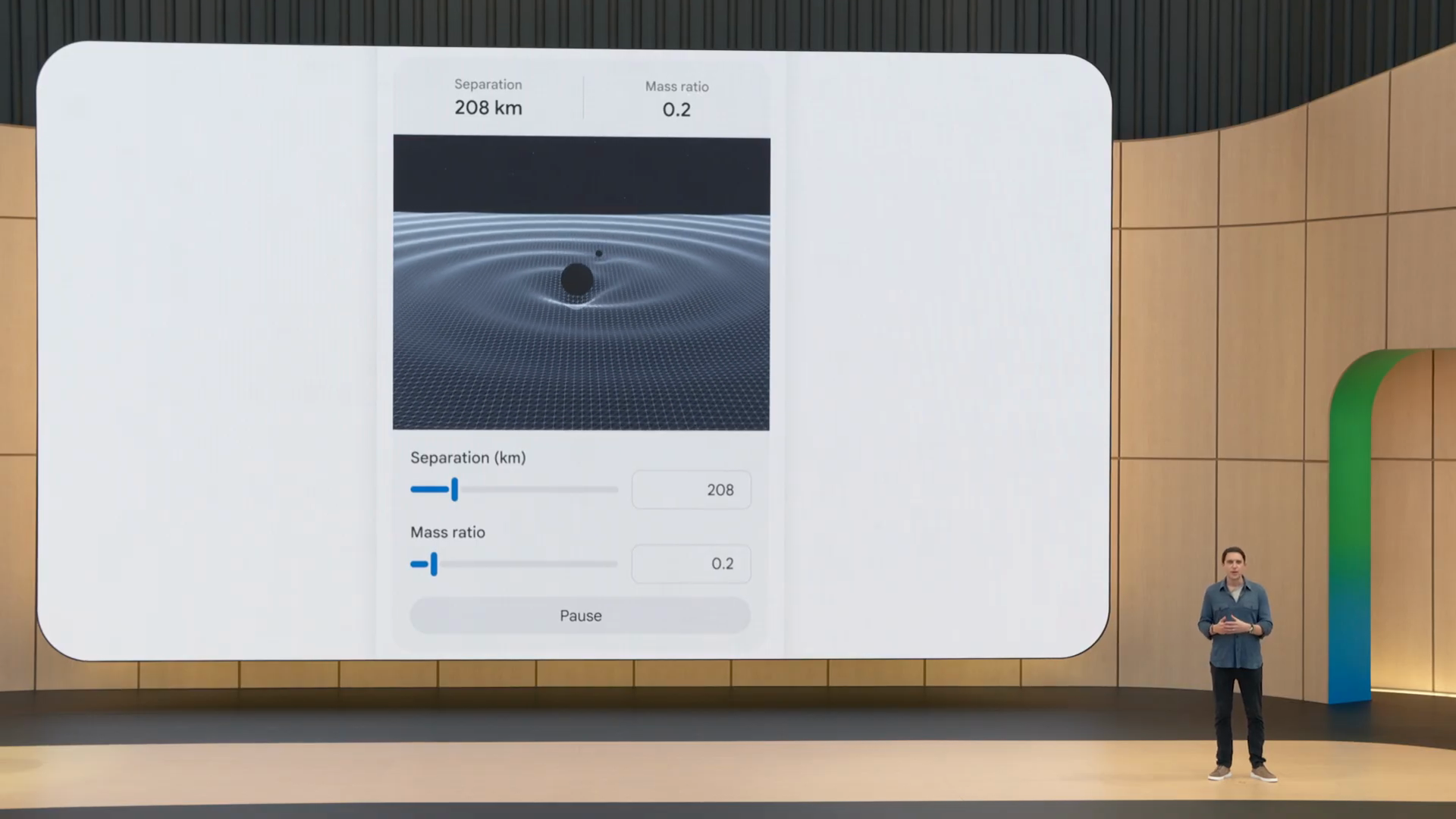
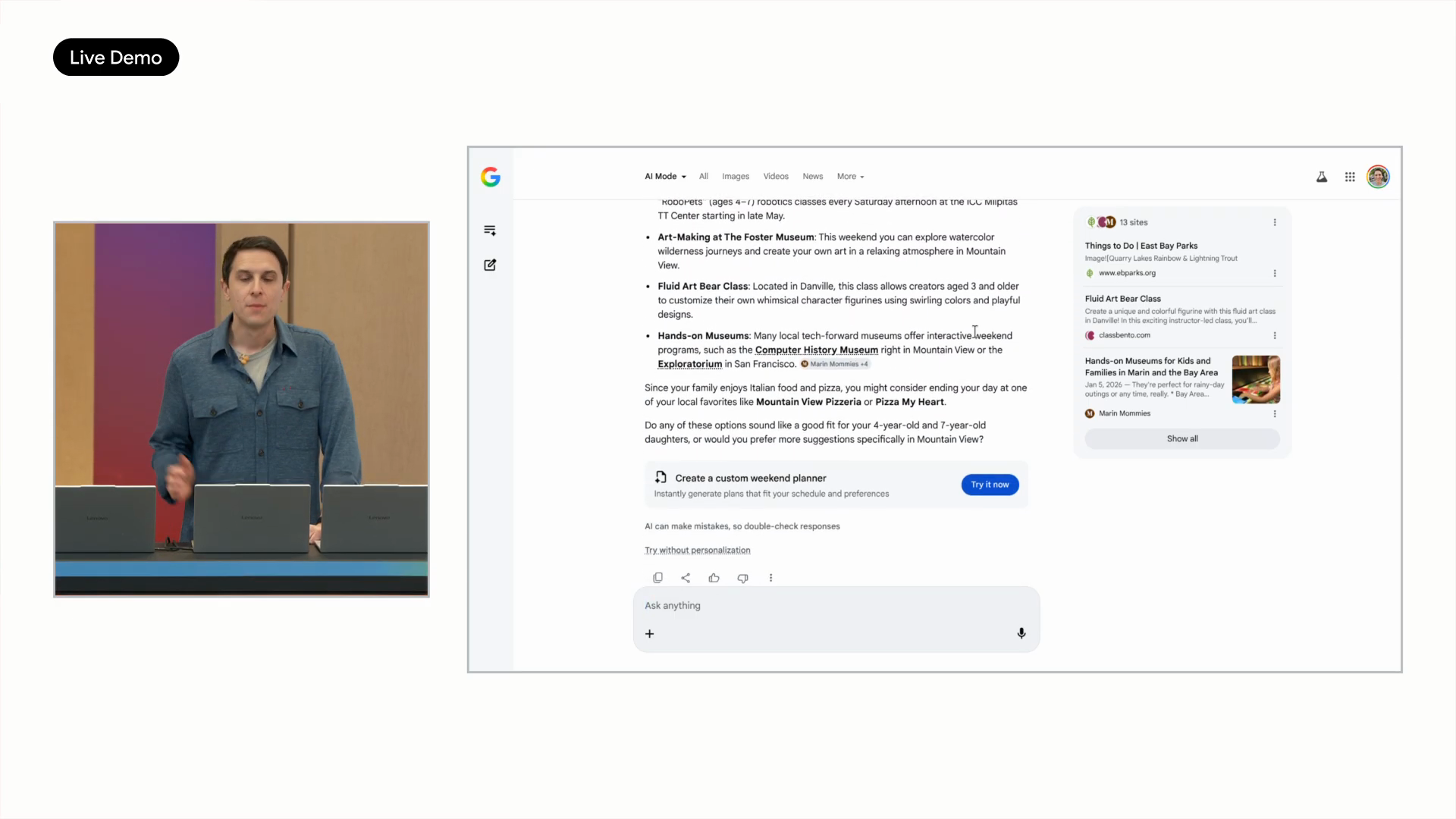
Generative UI in Search is bigger than the demo screen suggests. AI Mode now generates interactive tables, charts, simulations, and dashboards inline; users can persist any of them as a Custom Dashboard mini-app that updates over time. The live demo built a Stein Family Weekend Planner from a single prompt: morning activities, dinner reservations, mid-day chess class, all wired to Google Maps and tappable to convert. For DTC and local merchants, this is the surface where a product feed gets rendered as a comparison table or itinerary card with no merchant-side template work.
Agentic Booking extends Search's booking agent from restaurants into home repair, beauty, and pet care, including the ability to voice-call the merchant. The voice-calling booking agent is the first consumer-side agent that picks up a phone, calls a small business, and transacts on behalf of a user. Combined with Information Agents and Spark, this is Google making the bet that the "agentic web" will be primarily Google-distributed: the agent that finds the thing, the agent that watches for the thing, the agent that books the thing, all running on the same identity stack.
Live Docs and SynthID / C2PA: voice-first Workspace and provenance in Search
Docs Live is the Workspace counterpart to AI Mode. The user starts talking, Gemini structures the output as a document in real time, with the same multimodal range as Search: voice input, mail context, local intelligence, and Gemini reasoning. Rolling out to Google AI Pro and Ultra subscribers this summer.
The companion announcement is SynthID + C2PA verification rolling out in Search and Chrome soon. Any selected image can be checked for AI provenance inline, with SynthID watermark detection plus the C2PA content credential chain rendered as an AI Overview answer. For agentic commerce specifically, this is the trust primitive on top of product imagery, listing photos, and sponsored placements that agents will increasingly select and surface without a human in the loop.
What it all means
Google's agentic-commerce strategy stopped being a constellation of standalone announcements and became a stack. Universal Cart is the consumer surface. UCP is the merchant rail. AP2 (now FIDO-stewarded) is the payments substrate. Gemini Spark is the autonomous agent that uses all three. AI Mode + Information Agents is the always-on discovery layer feeding the whole thing. Project Mariner's wind-down is the cleanup: CV-on-rails dies; protocol-on-rails wins.
Read against OpenAI's same-week move (Personal Finance + Plaid into 12,000+ banks, covered in last week's News of the Week): both Google and OpenAI shipped the financial substrate plus the agent shell in the same five-day window. The difference is distribution. OpenAI has the conversational habit; Google has the queryable web, the merchant directory, the payment rails, and a billion-plus logged-in users on AI Mode.
"Being legible to AI agents" is no longer one project. It is at least three: structured product feeds that pass multi-protocol testbeds (ACP, UCP, AP2), citation tracking across AI surfaces (ChatGPT, Gemini, AI Mode, Perplexity), and merchant-side participation in whichever cart or agent stack your category buyers default to.
Watch more
- · Google I/O ‘26 Keynote, 1h 51m, official Google channel (the main video embedded above)
- · Developer Keynote (Google I/O ‘26), 59 min, Google for Developers channel
- · Developer Keynote 5-minute recap, official short-form, Google for Developers channel
- · Google I/O ‘26 Keynote: American Sign Language, official ASL stream
- · All I/O 2026 sessions, full playlist including breakouts
- · Sundar Pichai's I/O 2026 letter on the Google blog